P01_team's
P01_team's
P01_team's
From fragmented data to a continuous clinical workflow
From fragmented data to a continuous clinical workflow
From fragmented data to a continuous clinical workflow
Clinical information was available across multiple systems, but gynecologists still had to move between sources and reconstruct the context needed for each decision. The workflow requirements were informed by clinical literature, existing workflows, and domain discussions. Simply bringing more data into one interface would improve visibility without solving this underlying workflow problem, because the API structures reflected where data came from rather than how clinicians used it.
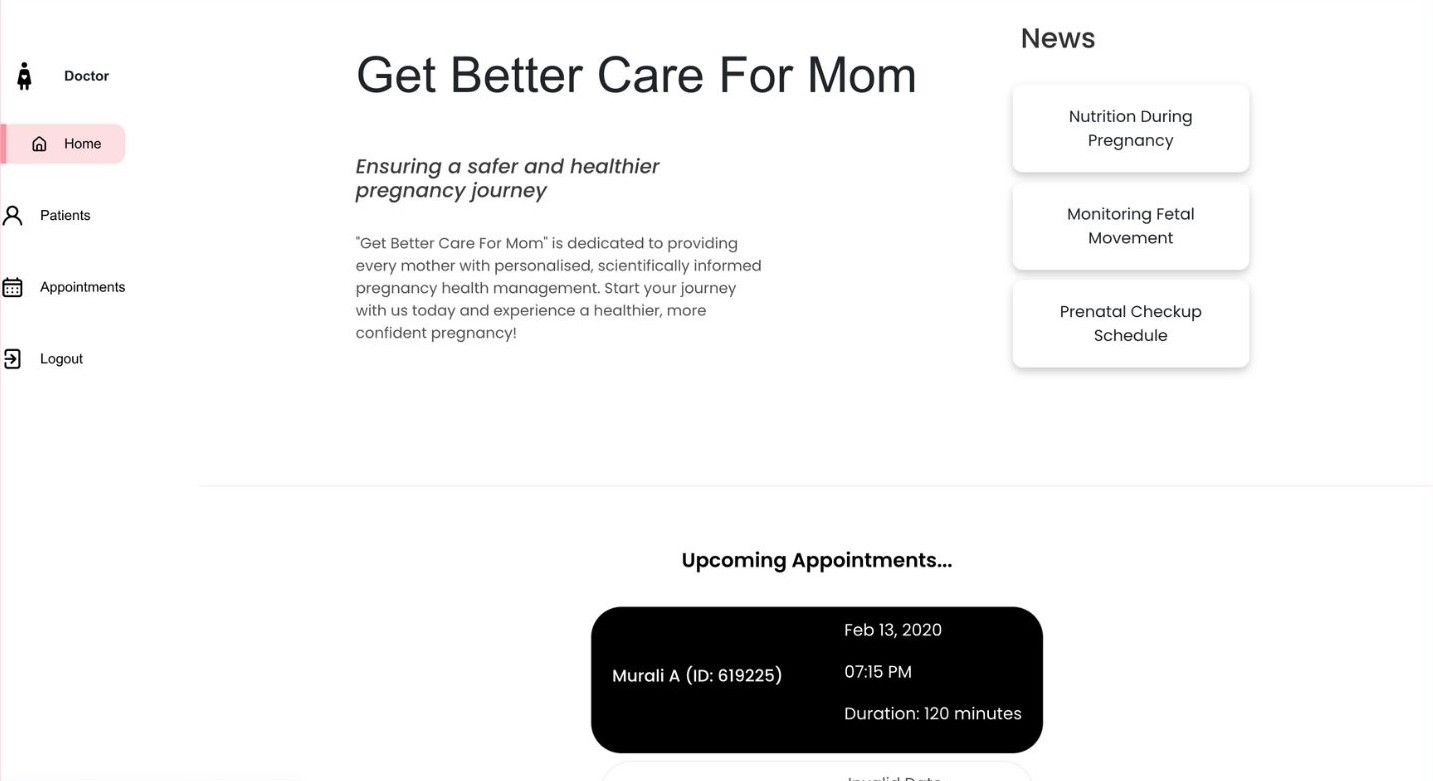
I therefore integrated the HL7 FHIR APIs through a data-mapping layer, reorganizing information around the clinical workflow before presenting it in the React interface. The resulting prototype was refined through four rounds of usability testing to validate workflow reliability and information consistency.
Key decision / trade-off
Direct API → UI: simpler implementation, but the interface would continue to inherit fragmented source structures.
API → Mapping → Workflow → UI: adds translation logic, but allows the workflow to remain consistent across different data sources.
Scope: the prototype validates the integration and workflow concept; it does not claim production-scale hospital interoperability.
Takeaway: System integration became a translation layer between how technical systems organize data and how people actually make decisions.
React.js · API Integration · HL7 FHIR · Data Mapping · Workflow Analysis
Clinical information was available across multiple systems, but gynecologists still had to move between sources and reconstruct the context needed for each decision. The workflow requirements were informed by clinical literature, existing workflows, and domain discussions. Simply bringing more data into one interface would improve visibility without solving this underlying workflow problem, because the API structures reflected where data came from rather than how clinicians used it.
I therefore integrated the HL7 FHIR APIs through a data-mapping layer, reorganizing information around the clinical workflow before presenting it in the React interface. The resulting prototype was refined through four rounds of usability testing to validate workflow reliability and information consistency.
Key decision / trade-off
Direct API → UI: simpler implementation, but the interface would continue to inherit fragmented source structures.
API → Mapping → Workflow → UI: adds translation logic, but allows the workflow to remain consistent across different data sources.
Scope: the prototype validates the integration and workflow concept; it does not claim production-scale hospital interoperability.
Takeaway: System integration became a translation layer between how technical systems organize data and how people actually make decisions.
React.js · API Integration · HL7 FHIR · Data Mapping · Workflow Analysis
Clinical information was available across multiple systems, but gynecologists still had to move between sources and reconstruct the context needed for each decision. The workflow requirements were informed by clinical literature, existing workflows, and domain discussions. Simply bringing more data into one interface would improve visibility without solving this underlying workflow problem, because the API structures reflected where data came from rather than how clinicians used it.
I therefore integrated the HL7 FHIR APIs through a data-mapping layer, reorganizing information around the clinical workflow before presenting it in the React interface. The resulting prototype was refined through four rounds of usability testing to validate workflow reliability and information consistency.
Key decision / trade-off
Direct API → UI: simpler implementation, but the interface would continue to inherit fragmented source structures.
API → Mapping → Workflow → UI: adds translation logic, but allows the workflow to remain consistent across different data sources.
Scope: the prototype validates the integration and workflow concept; it does not claim production-scale hospital interoperability.
Takeaway: System integration became a translation layer between how technical systems organize data and how people actually make decisions.
React.js · API Integration · HL7 FHIR · Data Mapping · Workflow Analysis